
Where Gays Go To Retire (Safely, Supported and Well)
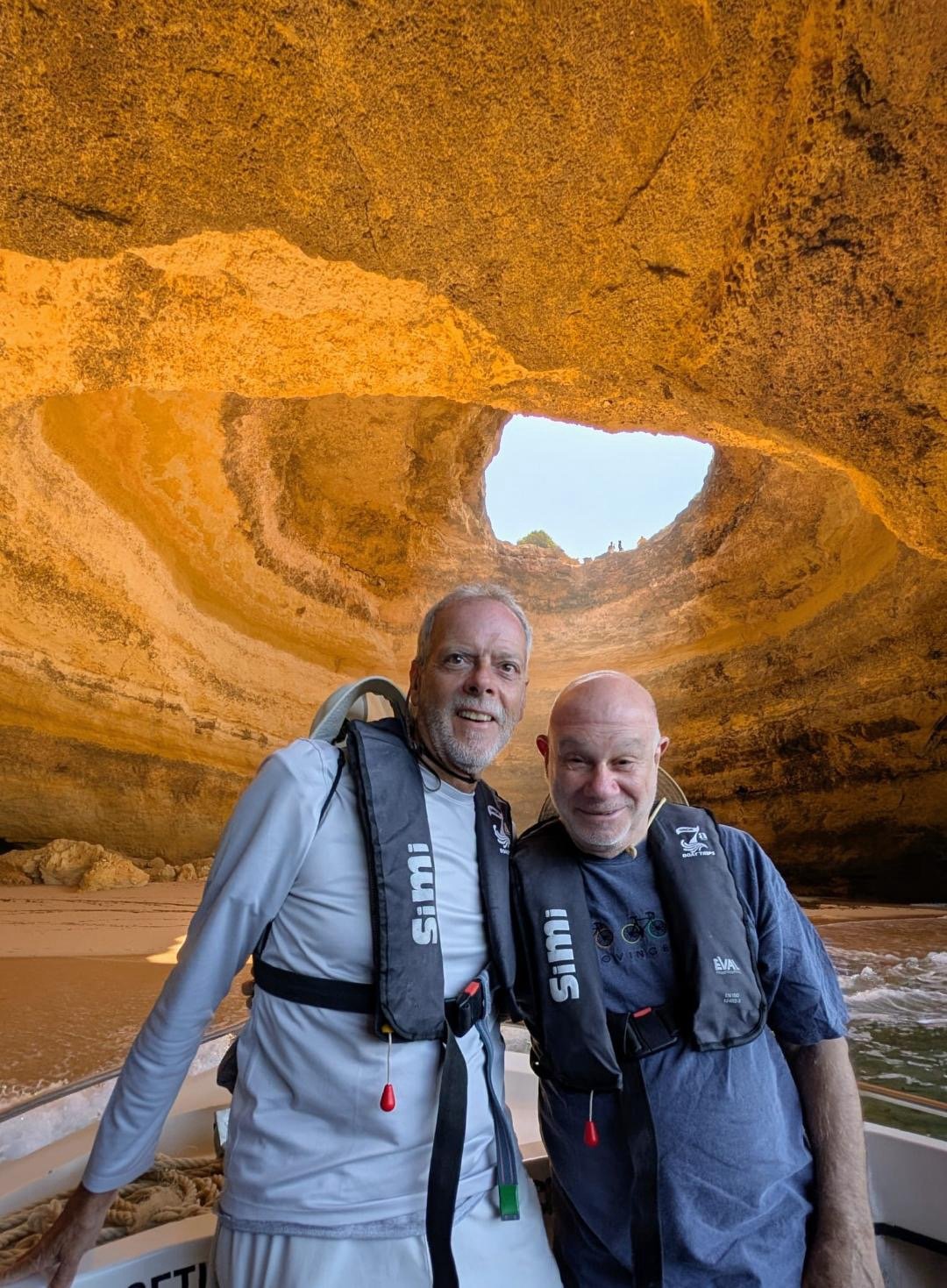
Randy Wilcox and Rich Costabile
Years ago I had a great idea for a television series. It would be called “Lavender Heights” and it would set at a senior living complex — but a deluxe retirement compound specially tailored for the LGBTQ+ community. Think of it as “White Lotus” for gay seniors.
The stunning enclave would have breathtaking views (mountains or sea, or both), gorgeously designed cottages (think Nate Berkus), there would be a model waitstaff (literally), beautiful pools (and pool boys), top entertainment (RuPaul’s finest queens), a screening room premiering the hottest shows (“Heated Rivalry” would have previewed here), a spa and gym to die for (not to mention hunky masseurs and star trainers) and the food would be haute cuisine with Top Chefs overseeing the menu. The place would be so sought-after that heterosexuals would pretend to be gay just to get in.
But wait. It may already be here — or close to it.
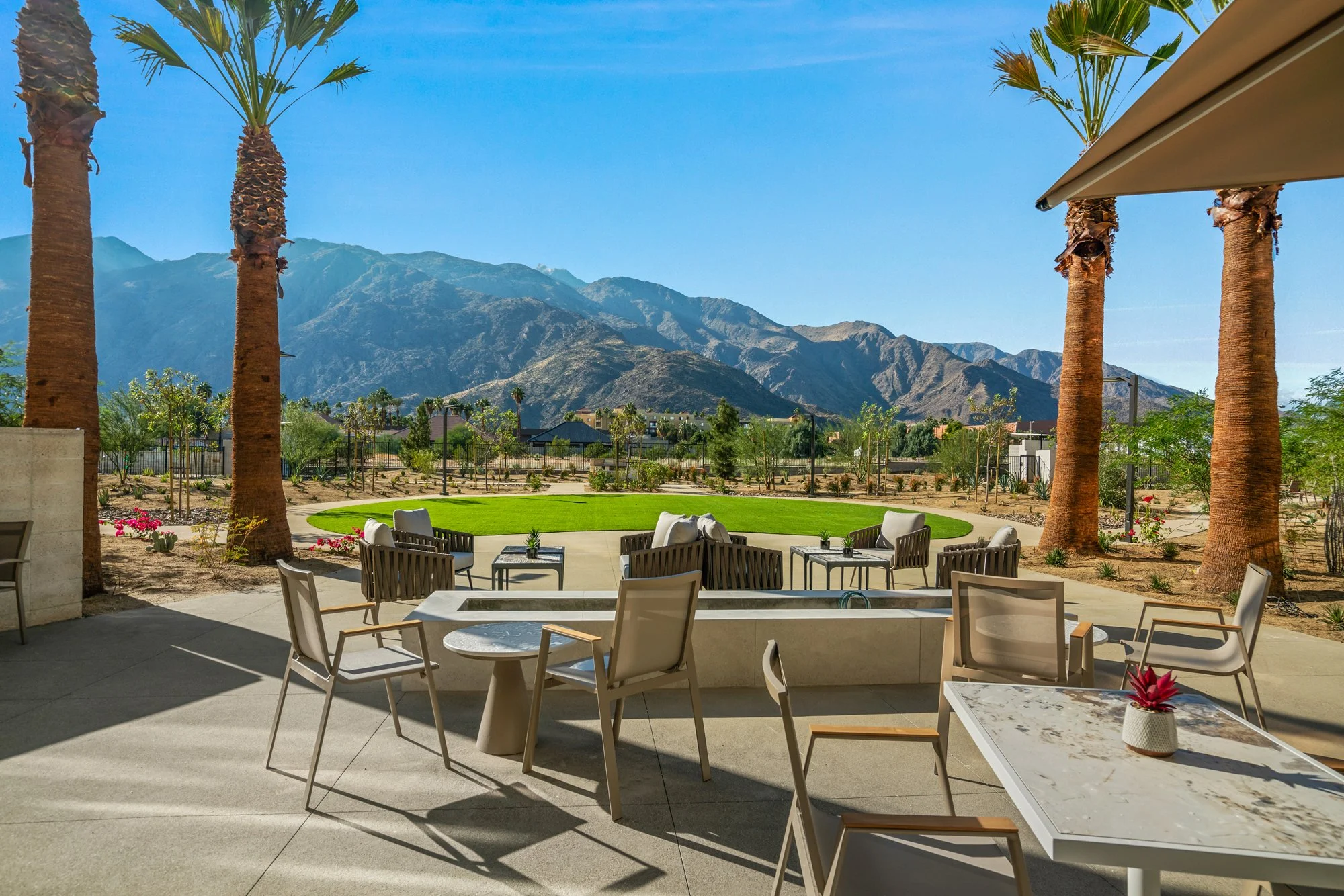
Living Out in Palm Springs
Living Out
Here’s the scene last year: John Waters looked out at an audience of LGBTQ+ fans eager for his delightfully trashy stand-up routine. But the iconic film director, writer and gay icon wasn’t performing at a concert hall but rather an outdoor stage at Living Out, the Palm Springs residential complex, which describes itself as “an elegant apartment community for active LGBTQ 55+ adults and their allies.” In less than two years, the complex is nearing capacity for its 122 rental apartments.
Against a stunning backdrop of the San Jacinto Mountains, residents had reserved front row seats for the outdoor show, one of the many perks of living in a compound on a nine-acre site. Living Out (livingout.com) features an epic pool, a pet park, putting green, bocce courts, an indoor/outdoor gym, game room, urgent care center, and screening room, among its attractions. It also boasts Alice. B.’s, a first-class restaurant on site created by James Beard Award–winning chefs Susan Feniger and Mary Sue Milliken (Food Network’s “Two Hot Tamales” series).
]“It was obvious that as our [LGBTQ+] community aged we needed our own place,” says Quincy, Mass. native Loren S. Ostrow, visionary and developer of Living Out. “Many existing senior living [complexes] were not always welcoming.”
Some may say Palm Springs and its neighboring desert cities (such as Cathedral City and Rancho Mirage), are like one big gay community anyway, so why is such a facility needed? After all, Palm Springs has the highest per-capita queer year-round population in the U.S., with estimates around 50 percent of the population. You can’t swing a rainbow flag without hitting a drag brunch in the city where in one year the mayor and the entire city council were all LGBTQ+.
“For many, it doesn’t matter how welcoming a city or town may be there’s still loneliness and isolation,” says Ostrow who is also on the executive board at SAGE, the nation’s oldest and largest organization serving the older LGBTQ+ community,
At 74, Ostrow says he is not looking to do further developments but hopes to encourage other developers to use the Living Out template in other locales around the country.
What to look for
The senior LGBTQ+ demographic is indeed growing.
According to a 2024 Gallup poll, nearly 10 percent of the U.S. population identified as LGBTQ+, with more than 3 million LGBTQ+ adults aged at least 55. That number is expected to more than double in the next five years, according to SAGE.
According to an AARP survey of older LGBTQ+ adults, 41 percent said they were concerned about hiding their identity to avoid housing discrimination as they age; the figure was 58 percent of trans and nonbinary respondents.
Overall, older LGBTQ+ people look to many of the same things their heterosexual allies do: To live in an area with reasonable prices and taxes, an agreeable climate, walkability, an abundance of cultural and recreational activities, access to good health care — and safety.
But gays look to other factors, too: an active LGBTQ+ social scene, gay-friendly businesses nearby, a community-wide welcoming spirit, the protection of non-discrimination laws, and a medical infrastructure sensitive to the needs of their community.
Top States
According to Retirement Living, among the top states for safety and inclusivity include: California, Oregon, Washington, New York, New Jersey, Colorado, Connecticut and Massachusetts.
Cities known for their prominent LGBTQ+ communities: New York City, San Francisco, Los Angeles and Washington, D.C. are at the top — though cost of living there is high.
LGBTQ+ residential senior complexes round the country can range from apartment clusters, assisted living or continuing care compounds and as well as affordable care housing. (In Palm Springs, there’s also Stonewall Gardens, an assisted living complex.)
A partial list of other progressive, gay-friendly cities with a thriving LGBTQ+ base include : Minneapolis, Minn.; Seattle, Wash.; Denver, Colo.; King City and Portland, Oregon; Sante Fe, N.M.; Asheville, N.C.; Philadelphia, Boston, Tucson, Ariz. and Palm, Springs, Calif.
“I think because of culture shift and visibility, people are seeing that LGBTQ+ people are aging in need of culturally responsive, affirming housing,” says Sydney Kopp-Richardson, director of the National LGBTQ+ Elder Housing Initiative at SAGE. ”Housing developers — both nonprofit and for-profit, and affordable housing developers — are seeing this market and are really capitalizing on it.”
The list of gay-centric is growing yearly and varies widely. A partial listing includes: Village Hearth (Durham, N.C.): Fountaingrove Lodge (Santa Rosa, Calif.); The Palms of Manasota (Palmetto, Fla): Birds of a Feather Resort Community (Pecos, N.M.); Rainbow Vista (Gresham, Ore.); Open House Community at 55 Laguna (San Francisco, Calif.); Town Hall Apartments (Chicago); Crotona Pride House (Bronx); Bay Shore Senior Residences (Bayshore, N.Y.).
Also: The Resort on Carefree Boulevard (North Ft. Meyers, Fla.); Stonewall House, (Brooklyn, N.Y.); The Pryde (Boston, Mass.); The Residences at Equality Park, (Wilton Manors, Fla.); The Connie House ALF, (Boynton Beach, Fla.); John C. Anderson Apartments, (Philadelphia, Pa.); Law Harrington Senior Living Center (Houston, Texas); Pride Place, (Seattle, Wash.); The Opal (Portland, Ore.) and A Place for Us (Cleveland, Ohio).
Something that many take into consideration is that although some cities that are ranked high with many positive factors — Ft. Lauderdale, and Tampa, Fla, for example — they are in states with governmental bodies that are not supportive of the LGBTQ+ community, or are even viewed as hostile.
International
Seeking retirement settings outside of the U.S. is an increasingly appealing option for many, especially in the present polarizing landscape. Frequently cited as the most accepting countries for gays are Iceland, Norway, The Netherlands, Sweden, and Canada.
Western Europe and the U.K. as a whole have been in the forefront of gay rights and acceptance for decades. In many European cities — Stockholm is just one example — acceptance has been so complete that there isn’t even a specific LGBTQ+ neighborhood because gays have been so integrated into the city as a whole.
Other countries with progressive rights, legal protections, and vibrant gay scenes include: Australia, Mexico (Puerto Vallarta and Mexico City are most popular); Colombia (particularly in Bogotá, which houses the massive Theatron nightclub); Costa Rica (the first Central American country to legalize same-sex marriage); Uruguay (especially in Montevideo and Punta del Este); Brazil (besides Rio de Janeiro, the world's largest Pride parade is in São Paulo); Chile (recently achieving a perfect score on Equaldex's Legal Index) and Argentina (Buenos Aires is a major hub for queer nightlife).
The United States is ranked 23rd out of 136 countries for LGBTQ+ legal rights in the most recent survey by the Williams Institute at UCLA University.
Henry Scott, a journalist who lived in West Hartford early in his career before relocating to New York City, Miami and Los Angeles, now lives in Buenos Aires.
“The city has dozens of gay bars, nightclubs, bathhouses, and cafes dedicated to LGBTQ+ people,” says Scott. “Its annual Pride events, which take place in November (spring here) attract hundreds of thousands of people. The city has a gay arts and culture center (Casa Brandon) and an LGBTQ+ retirement center (Puerta Abierta), and it offers free health services to those with HIV. There are many expat groups in Buenos Aires — including gay expats — who have retired here and meet regularly to share their stories and advice.”
“Protection for same-sex marriage has been in Portugal’s constitution since 2010,” says Rich Costabile, 78, who with his husband Randall Wilcox,m 71 moved to Tavira, Algarve, in southern Portugal four years ago.
“Now there’s the EA Rainbow Club –with 400 LGBTQ+ members, friends, and allies who get together every month to socialize, and network,” says Costabile, a retired theatrical stage manager. “We feel very comfortable in our neighborhood, in Tavira, in the Algarve, and in Portugal as a whole. Lisbon and perhaps Porto, being more populous, have more of a gay presence.”
Connecticut
There may not be any senior complexes specifically created for the LGBTQ+ community in Connecticut but the state has strong LGBTQ+ protections and there are high-end facilities that are welcoming to gays, such as Seabury in Bloomfield which describes itself as “an active life plan community.”
We’re affiliated with the Episcopal Church which has a long and renown history of openness in terms of the gay community in terms of its base, clergy and leadership,” says Christine T. DuPont, vice president of marketing and communications.
For those who feel the more comfortable in their established communities, Dupont points to its Seabury At Home program, where people can have care and services in their own home throughout the state.
Similarly, Marc Zirolli, vice president of sales and marketing at Duncaster in Bloomfield, says that its large, full-service complex of more than 300 residences in its independent and further-care apartments offer a welcoming home to the gay community. “Our DEI committee is actively engaged here,” he says.
Resources
For more information gay seniors in retirement and housing the U.S. and internationally, check out the in-depth guidance on the website and pod cast Where Did Gays Retire. (wheredogaysretire.com). Other resources include: queermoneypodcast.com/gay-retirement-communities/; lgbtqseniorhousing.org; and retire fabulously.com