
Daniel Okrent's New Book Looks At Stephen Sondheim Personally
Stephen Sondheim’s Roxbury home was a welcome exurban retreat for the legendary composer, a place where he could escape the pressures of New York, create in a bucolic atmosphere and relax with those closest to him. It was also the place where Sondheim died at the age of 91 in 2021, following a Thanksgiving evening with close friends.
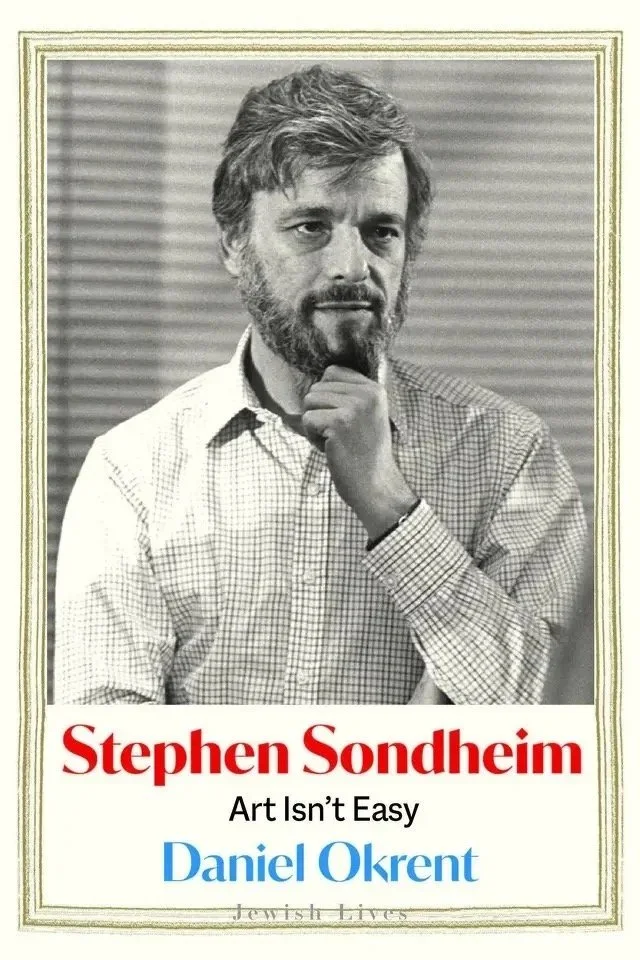
Sondheim’s connections with Connecticut — including a troubled try-out in 1962 with the musical “A Funny Thing Happened on the Way to the Forum” at New Haven’s Shubert Theater and the 1974 production of “The Frogs” at Yale’s Payne Whitney Gymnasium swimming pool — are part of Daniel Okrent’s intimate portrait of the beloved theatrical composer in the recently published “Stephen Sondheim: Art Isn’t Easy.”
Okrent, the first public editor of The New York Times and a Pulitzer-finalist author of books on Prohibition, baseball, and Rockefeller Center, is a Sondheim fan but never met the award-winning composer of such landmark musicals as “Company,” “Follies,” “A Little Night Music,” “Sunday in the Park With George,” “Into the Woods,”and “Sweeney Todd” — and lyricist for “West Side Story” and “Gypsy.”
What drew Okrent, 78, to the project — despite the many other books written about the composer over the decades — was his connections to some of Sondheim’s close friends and associates. Also newly available was an extensive taped interview which was not to be made public until after Sondheim’s death. Besides the dozens of interviews Okrent conducted, he also had access to 50 hours of Sondheim interviews conducted by Meryle Secrest, now 95, which were source material for her 1998 biography on the composer. Secrest’s archives are at the Beinecke Rare Book and Manuscript Library in New Haven.
“Many details of his life are well known,” said Okrent over coffee in New York’s Upper West Side, “but never the interior man — and that was my challenge.”
Okrent, who coincidentally bears a slight resemblance to the composer, did not want his book to be a rehash of familiar milestones or oft-told anecdotes. Instead, his compact book focuses on the emotional complexities behind the musical giant and how it related to his art.

Photo by Frank Rizzo
In his writing, Okrent does not shy away from Sondheim’s alcoholism, sexuality and psychotherapy. The author also examines Sondheim’s toxic relationship with his mother,“Foxy," his battles with self-doubt, his creative stagnation, and his late-in-life love with husband Jeff Romley.
“He’s not the person I thought he was when I began,” said Okrent as he connected the dots of Sondheim’s personal life and professional work and examined the great arcs “from alienation to connection, and from ambivalence to resolution.”
Okrent details how art indeed was often not easy for Sondheim. But neither were many of the his closest relationships, including those with director Hal Prince, composer Leonard Bernstein, composer Mary Rodgers, writer Arthur Laurents, actress Lee Remick and many others.
Sondheim could be both warm and supportive as well as cool and aloof, said Okrent. One didn’t approach him but rather waited for him to approach you. “It’s like some goddam cat,” said Mary Rodgers of her life-long pal.
Okrent also writes about Sondheim’s longtime relationship with alcohol. “He went to AA for just one meeting,” he said. Why just one? “He certainly would not have liked the religious aspects of it but I’m guessing he couldn’t identify or he just wasn’t interested in other peoples stories. He was also not one to reveal himself to others, perhaps because he was still trying to reveal himself to himself.”
Throughout the book, Okrent notes the composer’s hyper sensitivity to critics and criticism. “Sondheim would only remember the bad things,” said Okrent. “He would get overwhelmingly positive reviews, like for ‘A Funny Thing…’ but what he would remember were the negative ones.” Okrent also said the composer “despised” Robert Brustein, noted critic and founding artistic director of Yale Repertroy Theatre and dean of the Yale School of Drama, who was chilly to the composer’s works. Sondheim was just as furious for years at The New Yorker writer John Lahr who dismissed “Sweeney Todd.”
Okrent said one of his “aha” moments in his research arrived when a Sondheim intimate described the character of Sweeney Todd — obsessive, revengeful, single-minded, defiant — and said: “It’s the story of your life.” Sondheim’s later response? “But of course.”
The composer softened when he fell in love in the latter part of his life, first in the ‘90s with Peter Jones, and then later, when he was 73, with Romley, 50 years his junior, who became his husband in 2017.
What might Okrent think Sondheim’s reaction would be to his book?
“Oh, I think he might say two things. One: ‘Who gives a s---?’ And two: ‘Here’s another writer who thinks he knows about the theater.’ But maybe he would have added: ‘But yeah, you got me.’”